Phytoplankton Liquid Starter Culture - Nannochloropsis Oculata
Nannochloropsis Oculata Starter Culture – Grow Your Own Phytoplankton
You are running a copepod culture, a rotifer programme, or a marine fish breeding setup, and the cost and logistics of buying ready-to-use phytoplankton every week is starting to add up. You know the solution is to grow your own. You just need a clean, viable, contamination-free starting point that actually produces results rather than a crash in the first fortnight.
The most common reason home phytoplankton cultures fail is not equipment or technique. It is the quality of the starter. A dilute, aged, or contaminated culture introduced into a new growing vessel brings its problems with it. Low cell density means a slow establishment that leaves the culture vulnerable to competing organisms before it reaches productive density. Contamination from poorly maintained starter stock passes directly into every vessel it seeds. The culture crashes, the keeper loses confidence, and the plan to grow their own stalls before it begins.
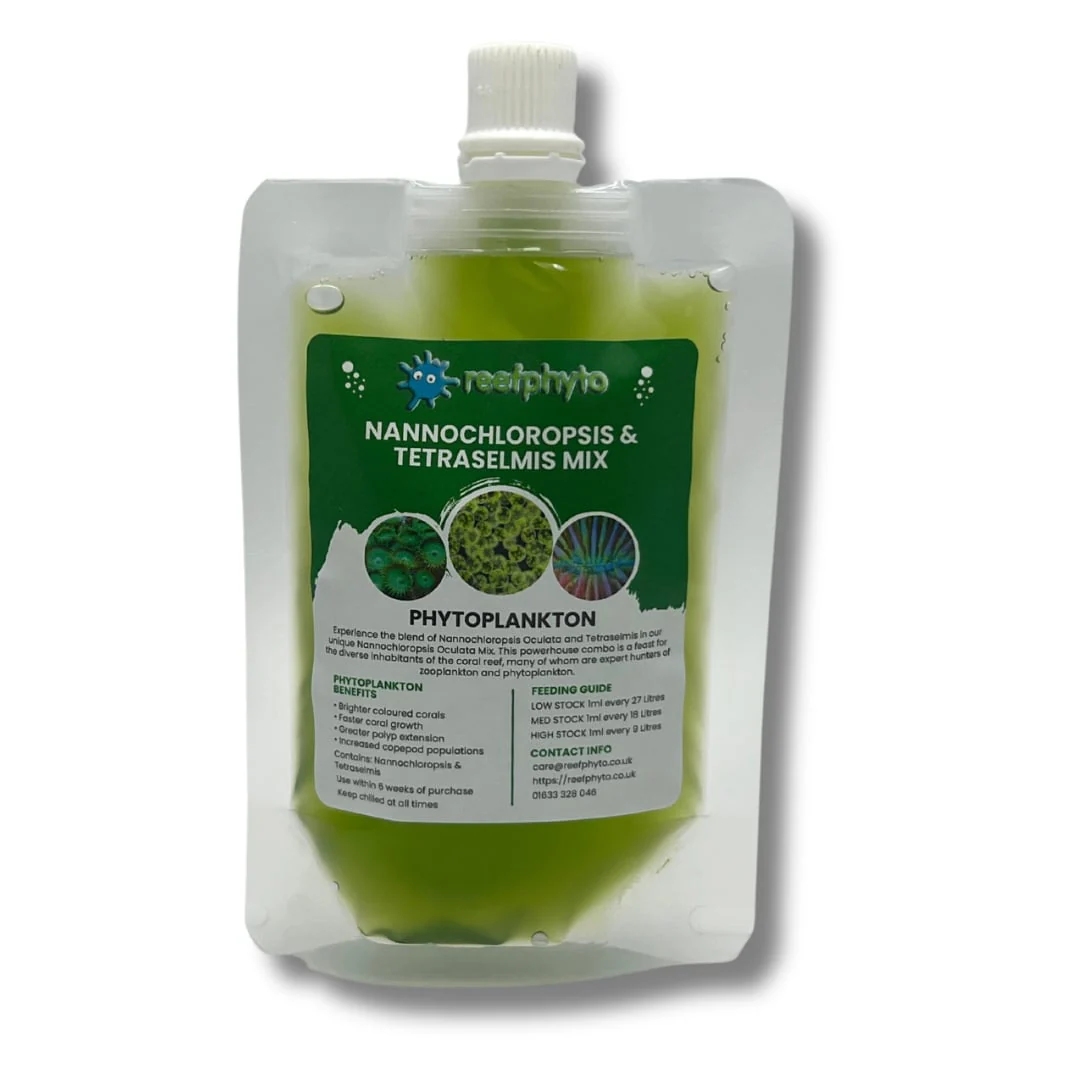
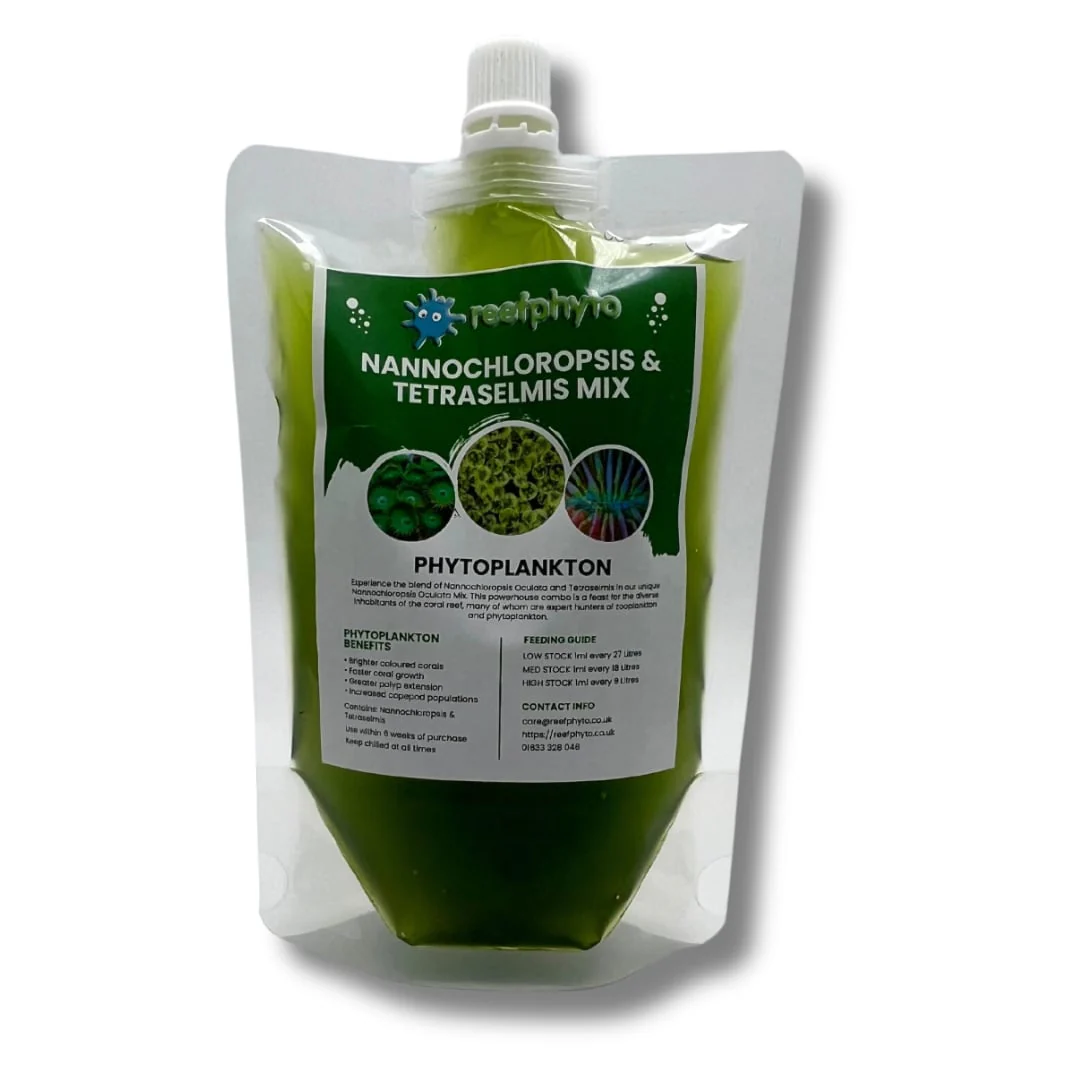
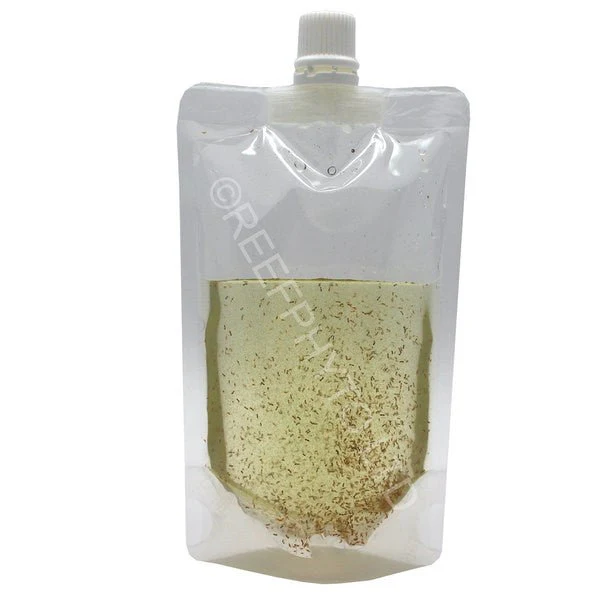
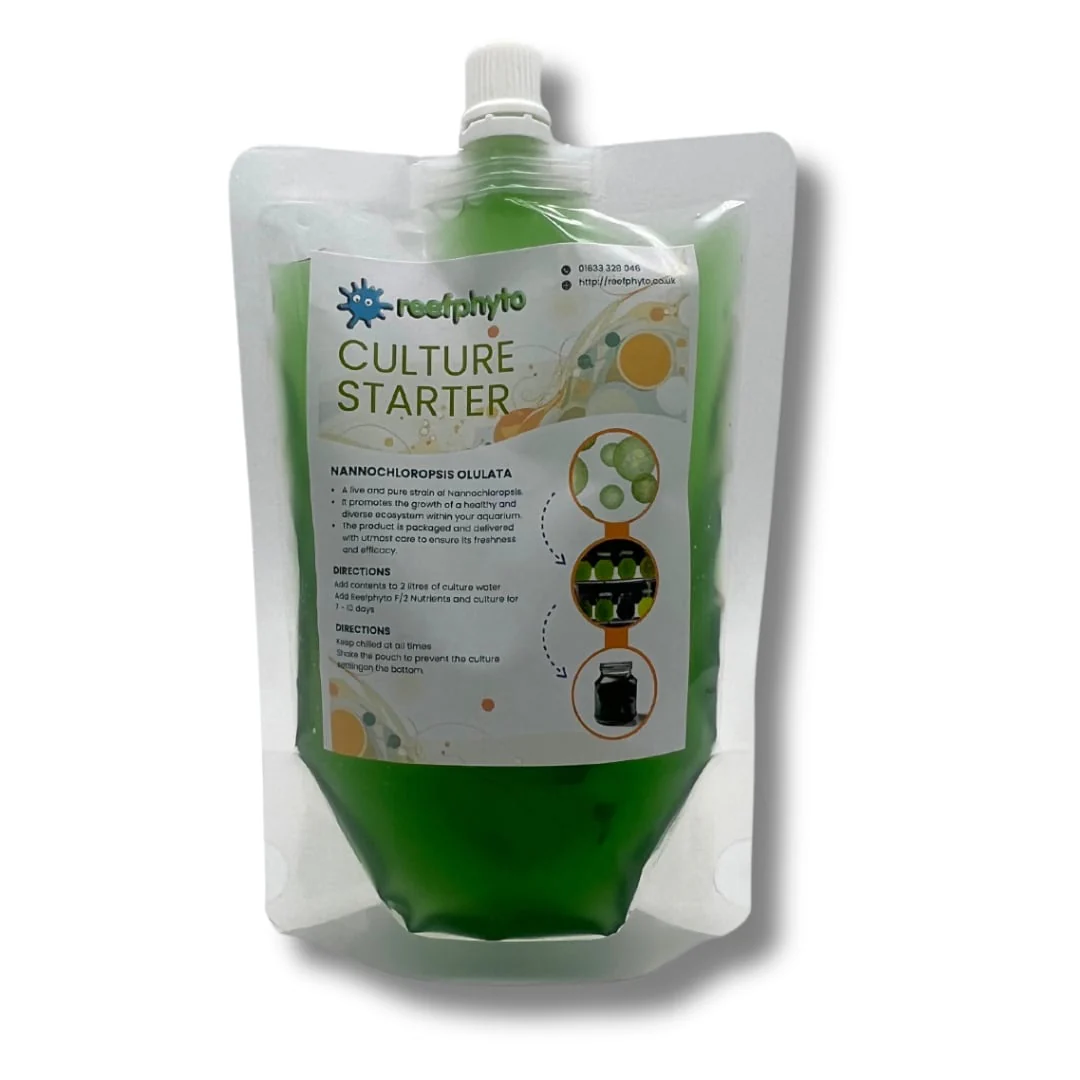
This Nannochloropsis oculata liquid starter culture is produced fresh at the Reefphyto facility in Wales at approximately 2 billion cells per millilitre, the same production standard as every live phytoplankton product in the range. It is a single-species culture of Nannochloropsis oculata, cells measuring 1 to 5 microns and rich in EPA, the species most widely used in marine aquaculture for feeding rotifers, copepods, and brine shrimp. Add it to your growing vessel with f/2 fertiliser, adequate lighting, and aeration, and a productive culture ready for first harvest is typically established within 7 to 10 days. Use within four weeks of delivery. Available in 250ml.
Within two weeks of receiving this starter, a keeper who has never grown phytoplankton before can have a productive, self-sustaining Nannochloropsis culture generating enough volume to feed a rotifer culture, maintain a copepod refugium, and dose the reef tank daily. The dependency on bought-in phytoplankton reduces. The cost per litre of live phytoplankton drops significantly. And the culture, maintained correctly, continues producing indefinitely from a single starting point.
Reefphyto has been culturing Nannochloropsis oculata at professional scale in Wales since 2008. This starter culture comes from the same stock we use in our own production. If you are new to phytoplankton culturing and want guidance on equipment, fertiliser ratios, and culture management, contact us directly. Darren has set up phytoplankton cultures across every scale from hobby to commercial and responds personally.
If you are ready to stop buying phytoplankton and start growing it, this is where that begins.
Who This Product Is For
This is not a reef tank dosing product. It is a live culture inoculant for reef keepers, marine fish breeders, rotifer culture operators, and copepod programme managers who want to produce their own phytoplankton rather than buy it ready-to-use.
The customer for this product has typically reached a point in their live food programme where the volume of phytoplankton they need week to week makes buying it in finished form either expensive, logistically complicated, or both. They understand that Nannochloropsis oculata is the correct species for their application. They have, or are building, a culture setup with appropriate lighting, aeration, and nutrient dosing. What they need is a clean, high-density, contamination-free starting point that gives their new culture the best possible foundation.
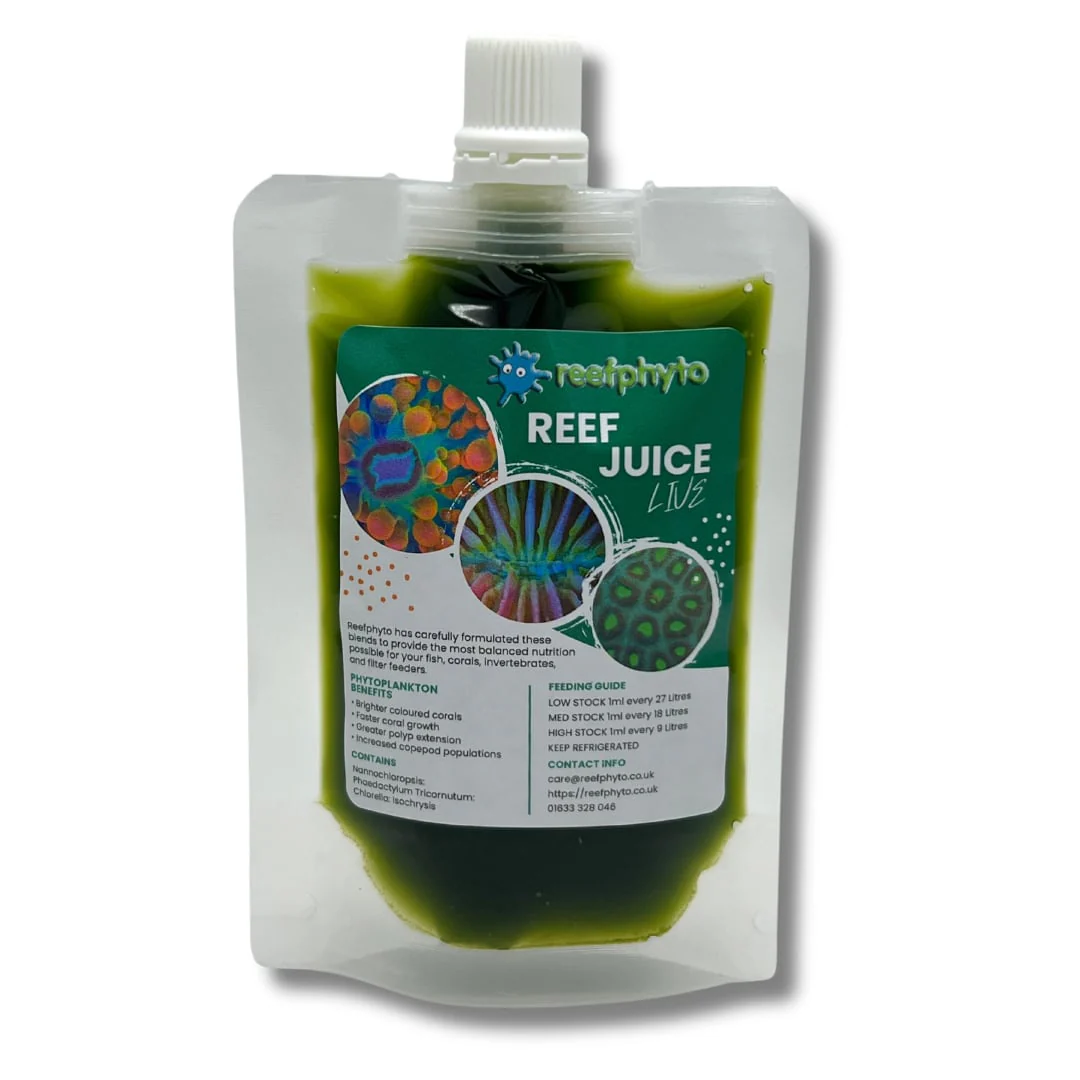
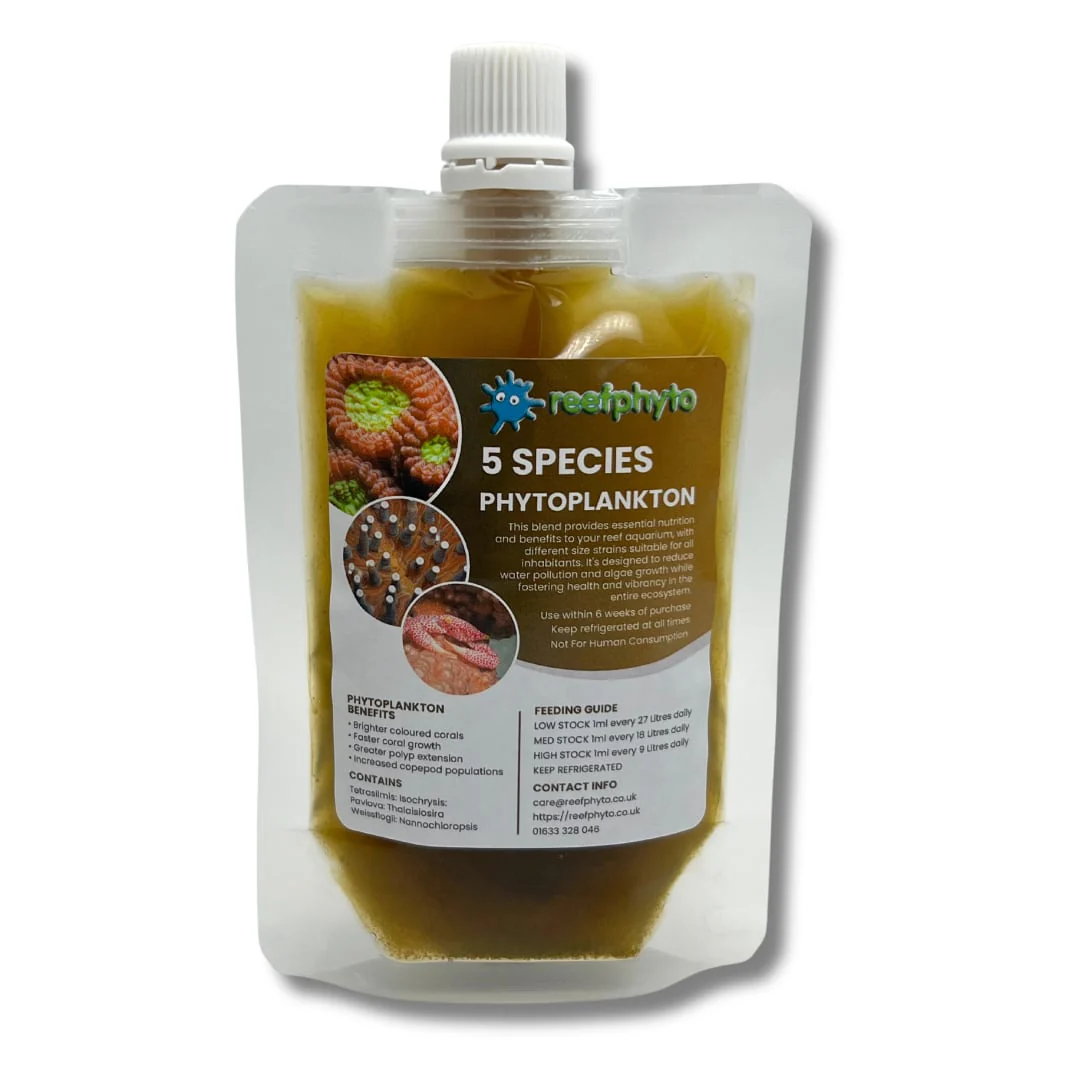
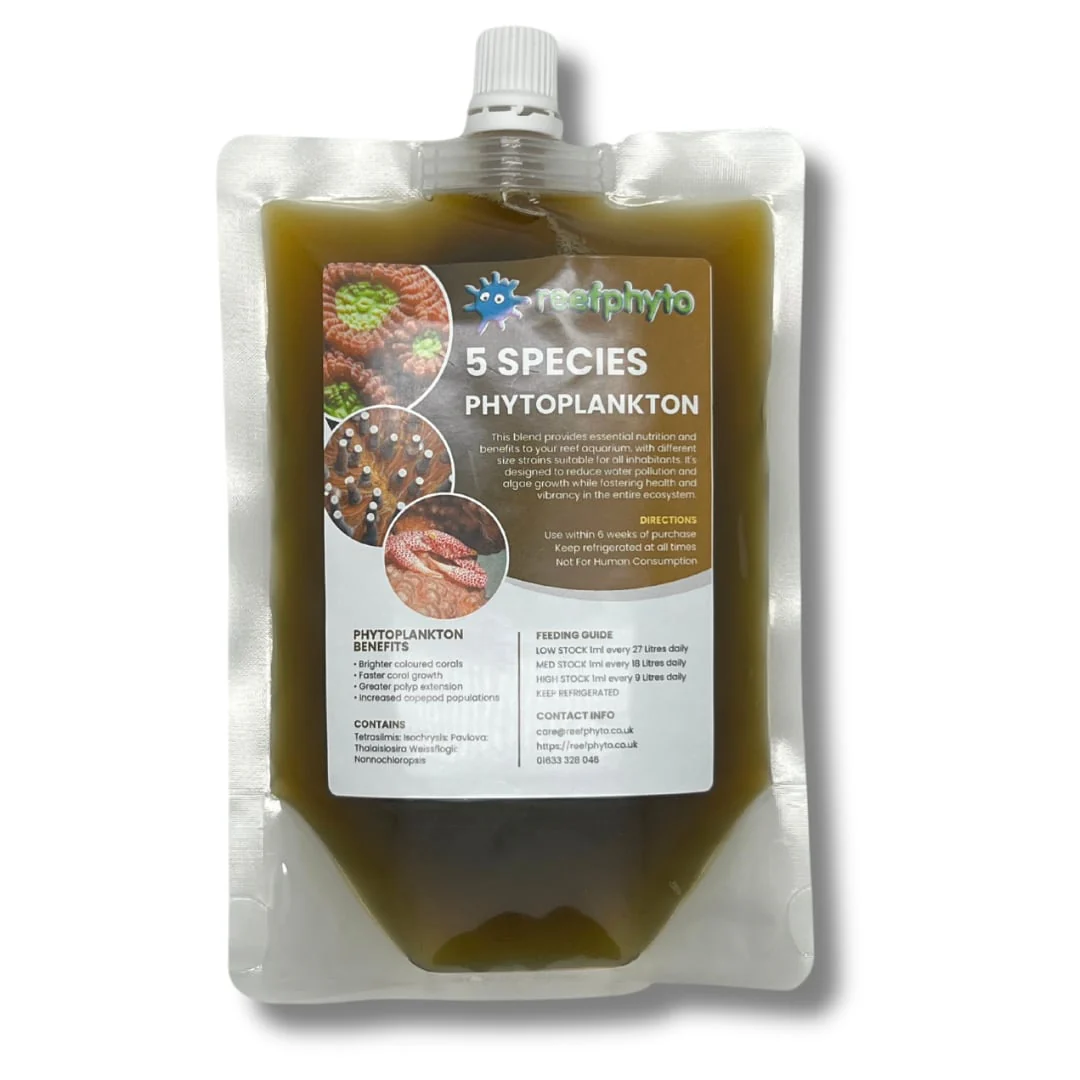
If you are looking for a ready-to-dose phytoplankton product for your reef tank, the Nannochloropsis gaditana live phytoplankton, Reef Juice blend, or five-species range are the appropriate products. This starter culture is specifically for growing.
Why Starter Culture Quality Matters More Than Anything Else
A phytoplankton culture is only as good as what you start it with. This is the fundamental principle that experienced culture operators understand and that beginners often learn the hard way.
Introduce a dilute culture into a new growing vessel and the cell density at establishment is too low to outcompete the bacteria, protozoa, and other microorganisms that will inevitably be present. The culture struggles to reach productive density before contaminating organisms take hold. Growth is slow, the colour stays pale, and within days to weeks the culture crashes rather than thriving.
Introduce a contaminated culture and every vessel you inoculate from it inherits the contamination. The problem multiplies rather than resolving, and tracing it back to the starter is often only apparent after multiple failed attempts.
Starting with a culture at 2 billion cells per millilitre from a professionally maintained, contamination-monitored production facility removes both of these variables. The cell density at inoculation is high enough to establish competitive dominance in the new vessel quickly. The culture stock is clean because it is produced under the same controlled aquaculture conditions as everything Reefphyto dispatches. The foundation is right, and that makes everything that follows significantly more reliable.
About Nannochloropsis Oculata as a Culture Species
Nannochloropsis oculata is the most widely cultured phytoplankton species in marine aquaculture for several reasons that make it the natural choice as a home culture species.
It is robust. Nannochloropsis oculata tolerates a wider range of temperature, salinity, and light intensity than most other marine microalgae species, which makes it forgiving of the variability inherent in home culture setups. It will not crash at the first fluctuation in room temperature or if the light cycle shifts slightly.
It is fast-growing. Under good conditions, Nannochloropsis oculata cultures double in cell density within 24 hours, allowing a culture to go from inoculation to first harvest density in 7 to 10 days and to produce regular harvests thereafter without extended waiting periods between cycles.
It is nutritionally versatile. The high EPA content of Nannochloropsis oculata makes it valuable as a direct feed for copepods and rotifers, as a brine shrimp enrichment algae, and as a reef tank dosing phytoplankton. A single well-maintained culture can serve all of these applications simultaneously from the same production vessel.
And it is the species most extensively documented in the marine aquaculture literature, which means that when questions arise about culture parameters, growth rates, contamination identification, or harvest technique, the information to answer them is readily available.
Setting Up Your Culture - What You Need
This starter culture is the biological component of a phytoplankton culture setup. The physical and chemical components you will need alongside it are straightforward.
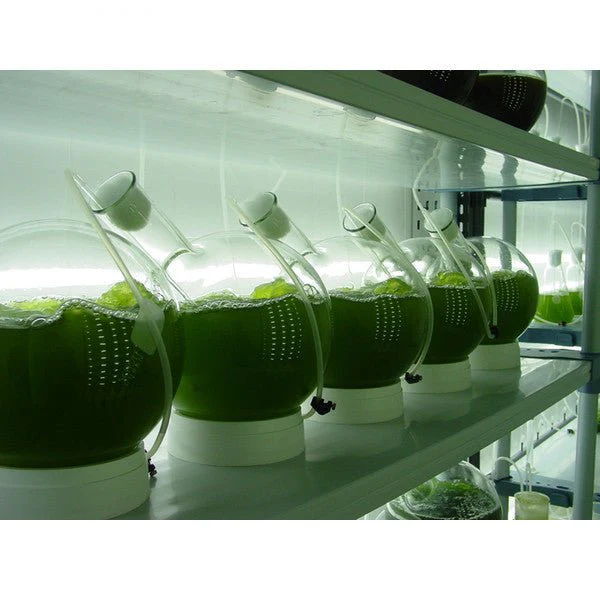
A growing vessel is typically a clear plastic or glass bottle of one to five litres for a first culture, scalable to larger carboys or culture bags as production increases. The vessel needs to be clean, sterilised before use with a dilute bleach solution followed by thorough rinsing, and airtight except for the airline inlet.
An air pump and airline provide the continuous aeration that keeps cells suspended, prevents settling, and supplies the carbon dioxide that Nannochloropsis requires for photosynthesis. A simple aquarium air pump is sufficient for cultures up to five litres.
A light source positioned close to the culture vessel drives photosynthesis and growth. A daylight-spectrum LED strip or fluorescent tube providing 12 to 16 hours of light per day is sufficient. More light means faster growth up to the point of photoinhibition, which is rarely a limiting factor in home setups.
F/2 fertiliser provides the nitrogen, phosphorus, trace elements, and vitamins that Nannochloropsis requires for sustained growth. The Reefphyto Phytoplankton Nutrient is the appropriate fertiliser product to use alongside this starter culture and is dosed according to the instructions provided.
Saltwater at 25 to 35 parts per thousand salinity, either natural seawater filtered and sterilised or synthetic marine salt mix, makes up the culture medium. Sterilising the culture water before inoculation by boiling or using a dilute sodium hypochlorite solution followed by sodium thiosulphate neutralisation removes competing organisms and gives the Nannochloropsis culture the cleanest possible starting environment.
The Culture Cycle - From Inoculation to Ongoing Production
Add the starter culture to your prepared growing vessel at a ratio of approximately one part starter to four parts prepared culture medium. Add f/2 fertiliser at the recommended rate. Position under your light source with continuous aeration running.
Within the first 24 to 48 hours the culture will show little visible change as the cells adapt to the new environment. Between days three and seven, under good conditions, the culture will visibly green up as cell density increases. By days seven to ten, a productive culture should be a dense, opaque green, indicating cell density sufficient for first harvest.
To harvest, remove 50 to 70 percent of the culture volume and replace with fresh prepared saltwater and f/2 fertiliser. The remaining culture inoculant will re-establish the harvested volume within three to five days under good conditions, allowing a regular semi-continuous harvest cycle.
The harvested phytoplankton can be dosed directly into the reef tank, added to rotifer or copepod culture vessels, or used for brine shrimp enrichment. A single one-litre culture vessel maintained on a regular harvest cycle can produce several litres of dense phytoplankton per week, which is sufficient to sustain a rotifer culture, maintain a copepod refugium, and provide daily reef tank dosing from a single production source.
Frequently Asked Questions
How is this different from the ready-to-dose Nannochloropsis gaditana product?
The ready-to-dose Nannochloropsis gaditana is produced for direct use in the reef tank or live culture feed applications. It is not intended to be grown on. This starter culture is specifically designed as an inoculant for establishing your own production culture. The species are closely related, both Nannochloropsis, but the starter culture is produced to culture-establishment specifications including a four-week shelf life that assumes use as a culture starter rather than immediate consumption.
What fertiliser should I use?
The Reefphyto Phytoplankton Nutrient is the f/2 medium formulated for use with this starter culture. It provides the nitrogen, phosphorus, trace elements, and vitamins required for healthy, sustained Nannochloropsis growth. Using an f/2 formulation ensures the culture develops the correct fatty acid and pigment profile that makes Nannochloropsis oculata nutritionally valuable.
Can I use tap water to make up my culture medium?
Tap water is not recommended as it contains chlorine, chloramine, and other compounds that inhibit phytoplankton growth. Use marine salt mix made up with dechlorinated or reverse osmosis water, or natural seawater that has been filtered and sterilised before use.
HHow long will the culture last before I need a new starter?
A well-maintained Nannochloropsis culture can be maintained indefinitely through regular harvesting and re-feeding. Cultures typically remain productive for months to years without requiring a new starter inoculant. A new starter is needed when a culture crashes due to contamination, temperature shock, or nutrient depletion, or when establishing additional production vessels from scratch.
HIs this suitable for beginners?
Yes, with the appropriate setup in place. Nannochloropsis oculata is the most forgiving and best-documented species for home phytoplankton culture, which makes it the natural starting point for keepers new to growing their own algae. The Reefphyto Phytoplankton Culture Kit, available separately, contains the equipment components needed to get started alongside this starter culture.
Reefphyto - Live Phytoplankton Production in Wales Since 2008
Reefphyto has been producing Nannochloropsis oculata and other live microalgae at professional scale in Wales since 2008. This starter culture comes directly from the same production stock we use in our own facility. If you are setting up a home phytoplankton culture for the first time and want guidance on equipment, fertiliser ratios, lighting, or culture management, contact us directly. Darren has established phytoplankton cultures at every scale from single-bottle hobby setups to large commercial production systems and responds personally to every enquiry.
Original: $22.68
-70%$22.68
$6.80Product Information
Product Information
Shipping & Returns
Shipping & Returns
Description
Nannochloropsis Oculata Starter Culture – Grow Your Own Phytoplankton
You are running a copepod culture, a rotifer programme, or a marine fish breeding setup, and the cost and logistics of buying ready-to-use phytoplankton every week is starting to add up. You know the solution is to grow your own. You just need a clean, viable, contamination-free starting point that actually produces results rather than a crash in the first fortnight.
The most common reason home phytoplankton cultures fail is not equipment or technique. It is the quality of the starter. A dilute, aged, or contaminated culture introduced into a new growing vessel brings its problems with it. Low cell density means a slow establishment that leaves the culture vulnerable to competing organisms before it reaches productive density. Contamination from poorly maintained starter stock passes directly into every vessel it seeds. The culture crashes, the keeper loses confidence, and the plan to grow their own stalls before it begins.
This Nannochloropsis oculata liquid starter culture is produced fresh at the Reefphyto facility in Wales at approximately 2 billion cells per millilitre, the same production standard as every live phytoplankton product in the range. It is a single-species culture of Nannochloropsis oculata, cells measuring 1 to 5 microns and rich in EPA, the species most widely used in marine aquaculture for feeding rotifers, copepods, and brine shrimp. Add it to your growing vessel with f/2 fertiliser, adequate lighting, and aeration, and a productive culture ready for first harvest is typically established within 7 to 10 days. Use within four weeks of delivery. Available in 250ml.
Within two weeks of receiving this starter, a keeper who has never grown phytoplankton before can have a productive, self-sustaining Nannochloropsis culture generating enough volume to feed a rotifer culture, maintain a copepod refugium, and dose the reef tank daily. The dependency on bought-in phytoplankton reduces. The cost per litre of live phytoplankton drops significantly. And the culture, maintained correctly, continues producing indefinitely from a single starting point.
Reefphyto has been culturing Nannochloropsis oculata at professional scale in Wales since 2008. This starter culture comes from the same stock we use in our own production. If you are new to phytoplankton culturing and want guidance on equipment, fertiliser ratios, and culture management, contact us directly. Darren has set up phytoplankton cultures across every scale from hobby to commercial and responds personally.
If you are ready to stop buying phytoplankton and start growing it, this is where that begins.
Who This Product Is For
This is not a reef tank dosing product. It is a live culture inoculant for reef keepers, marine fish breeders, rotifer culture operators, and copepod programme managers who want to produce their own phytoplankton rather than buy it ready-to-use.
The customer for this product has typically reached a point in their live food programme where the volume of phytoplankton they need week to week makes buying it in finished form either expensive, logistically complicated, or both. They understand that Nannochloropsis oculata is the correct species for their application. They have, or are building, a culture setup with appropriate lighting, aeration, and nutrient dosing. What they need is a clean, high-density, contamination-free starting point that gives their new culture the best possible foundation.
If you are looking for a ready-to-dose phytoplankton product for your reef tank, the Nannochloropsis gaditana live phytoplankton, Reef Juice blend, or five-species range are the appropriate products. This starter culture is specifically for growing.
Why Starter Culture Quality Matters More Than Anything Else
A phytoplankton culture is only as good as what you start it with. This is the fundamental principle that experienced culture operators understand and that beginners often learn the hard way.
Introduce a dilute culture into a new growing vessel and the cell density at establishment is too low to outcompete the bacteria, protozoa, and other microorganisms that will inevitably be present. The culture struggles to reach productive density before contaminating organisms take hold. Growth is slow, the colour stays pale, and within days to weeks the culture crashes rather than thriving.
Introduce a contaminated culture and every vessel you inoculate from it inherits the contamination. The problem multiplies rather than resolving, and tracing it back to the starter is often only apparent after multiple failed attempts.
Starting with a culture at 2 billion cells per millilitre from a professionally maintained, contamination-monitored production facility removes both of these variables. The cell density at inoculation is high enough to establish competitive dominance in the new vessel quickly. The culture stock is clean because it is produced under the same controlled aquaculture conditions as everything Reefphyto dispatches. The foundation is right, and that makes everything that follows significantly more reliable.
About Nannochloropsis Oculata as a Culture Species
Nannochloropsis oculata is the most widely cultured phytoplankton species in marine aquaculture for several reasons that make it the natural choice as a home culture species.
It is robust. Nannochloropsis oculata tolerates a wider range of temperature, salinity, and light intensity than most other marine microalgae species, which makes it forgiving of the variability inherent in home culture setups. It will not crash at the first fluctuation in room temperature or if the light cycle shifts slightly.
It is fast-growing. Under good conditions, Nannochloropsis oculata cultures double in cell density within 24 hours, allowing a culture to go from inoculation to first harvest density in 7 to 10 days and to produce regular harvests thereafter without extended waiting periods between cycles.
It is nutritionally versatile. The high EPA content of Nannochloropsis oculata makes it valuable as a direct feed for copepods and rotifers, as a brine shrimp enrichment algae, and as a reef tank dosing phytoplankton. A single well-maintained culture can serve all of these applications simultaneously from the same production vessel.
And it is the species most extensively documented in the marine aquaculture literature, which means that when questions arise about culture parameters, growth rates, contamination identification, or harvest technique, the information to answer them is readily available.
Setting Up Your Culture - What You Need
This starter culture is the biological component of a phytoplankton culture setup. The physical and chemical components you will need alongside it are straightforward.
A growing vessel is typically a clear plastic or glass bottle of one to five litres for a first culture, scalable to larger carboys or culture bags as production increases. The vessel needs to be clean, sterilised before use with a dilute bleach solution followed by thorough rinsing, and airtight except for the airline inlet.
An air pump and airline provide the continuous aeration that keeps cells suspended, prevents settling, and supplies the carbon dioxide that Nannochloropsis requires for photosynthesis. A simple aquarium air pump is sufficient for cultures up to five litres.
A light source positioned close to the culture vessel drives photosynthesis and growth. A daylight-spectrum LED strip or fluorescent tube providing 12 to 16 hours of light per day is sufficient. More light means faster growth up to the point of photoinhibition, which is rarely a limiting factor in home setups.
F/2 fertiliser provides the nitrogen, phosphorus, trace elements, and vitamins that Nannochloropsis requires for sustained growth. The Reefphyto Phytoplankton Nutrient is the appropriate fertiliser product to use alongside this starter culture and is dosed according to the instructions provided.
Saltwater at 25 to 35 parts per thousand salinity, either natural seawater filtered and sterilised or synthetic marine salt mix, makes up the culture medium. Sterilising the culture water before inoculation by boiling or using a dilute sodium hypochlorite solution followed by sodium thiosulphate neutralisation removes competing organisms and gives the Nannochloropsis culture the cleanest possible starting environment.
The Culture Cycle - From Inoculation to Ongoing Production
Add the starter culture to your prepared growing vessel at a ratio of approximately one part starter to four parts prepared culture medium. Add f/2 fertiliser at the recommended rate. Position under your light source with continuous aeration running.
Within the first 24 to 48 hours the culture will show little visible change as the cells adapt to the new environment. Between days three and seven, under good conditions, the culture will visibly green up as cell density increases. By days seven to ten, a productive culture should be a dense, opaque green, indicating cell density sufficient for first harvest.
To harvest, remove 50 to 70 percent of the culture volume and replace with fresh prepared saltwater and f/2 fertiliser. The remaining culture inoculant will re-establish the harvested volume within three to five days under good conditions, allowing a regular semi-continuous harvest cycle.
The harvested phytoplankton can be dosed directly into the reef tank, added to rotifer or copepod culture vessels, or used for brine shrimp enrichment. A single one-litre culture vessel maintained on a regular harvest cycle can produce several litres of dense phytoplankton per week, which is sufficient to sustain a rotifer culture, maintain a copepod refugium, and provide daily reef tank dosing from a single production source.
Frequently Asked Questions
How is this different from the ready-to-dose Nannochloropsis gaditana product?
The ready-to-dose Nannochloropsis gaditana is produced for direct use in the reef tank or live culture feed applications. It is not intended to be grown on. This starter culture is specifically designed as an inoculant for establishing your own production culture. The species are closely related, both Nannochloropsis, but the starter culture is produced to culture-establishment specifications including a four-week shelf life that assumes use as a culture starter rather than immediate consumption.
What fertiliser should I use?
The Reefphyto Phytoplankton Nutrient is the f/2 medium formulated for use with this starter culture. It provides the nitrogen, phosphorus, trace elements, and vitamins required for healthy, sustained Nannochloropsis growth. Using an f/2 formulation ensures the culture develops the correct fatty acid and pigment profile that makes Nannochloropsis oculata nutritionally valuable.
Can I use tap water to make up my culture medium?
Tap water is not recommended as it contains chlorine, chloramine, and other compounds that inhibit phytoplankton growth. Use marine salt mix made up with dechlorinated or reverse osmosis water, or natural seawater that has been filtered and sterilised before use.
HHow long will the culture last before I need a new starter?
A well-maintained Nannochloropsis culture can be maintained indefinitely through regular harvesting and re-feeding. Cultures typically remain productive for months to years without requiring a new starter inoculant. A new starter is needed when a culture crashes due to contamination, temperature shock, or nutrient depletion, or when establishing additional production vessels from scratch.
HIs this suitable for beginners?
Yes, with the appropriate setup in place. Nannochloropsis oculata is the most forgiving and best-documented species for home phytoplankton culture, which makes it the natural starting point for keepers new to growing their own algae. The Reefphyto Phytoplankton Culture Kit, available separately, contains the equipment components needed to get started alongside this starter culture.
Reefphyto - Live Phytoplankton Production in Wales Since 2008
Reefphyto has been producing Nannochloropsis oculata and other live microalgae at professional scale in Wales since 2008. This starter culture comes directly from the same production stock we use in our own facility. If you are setting up a home phytoplankton culture for the first time and want guidance on equipment, fertiliser ratios, lighting, or culture management, contact us directly. Darren has established phytoplankton cultures at every scale from single-bottle hobby setups to large commercial production systems and responds personally to every enquiry.