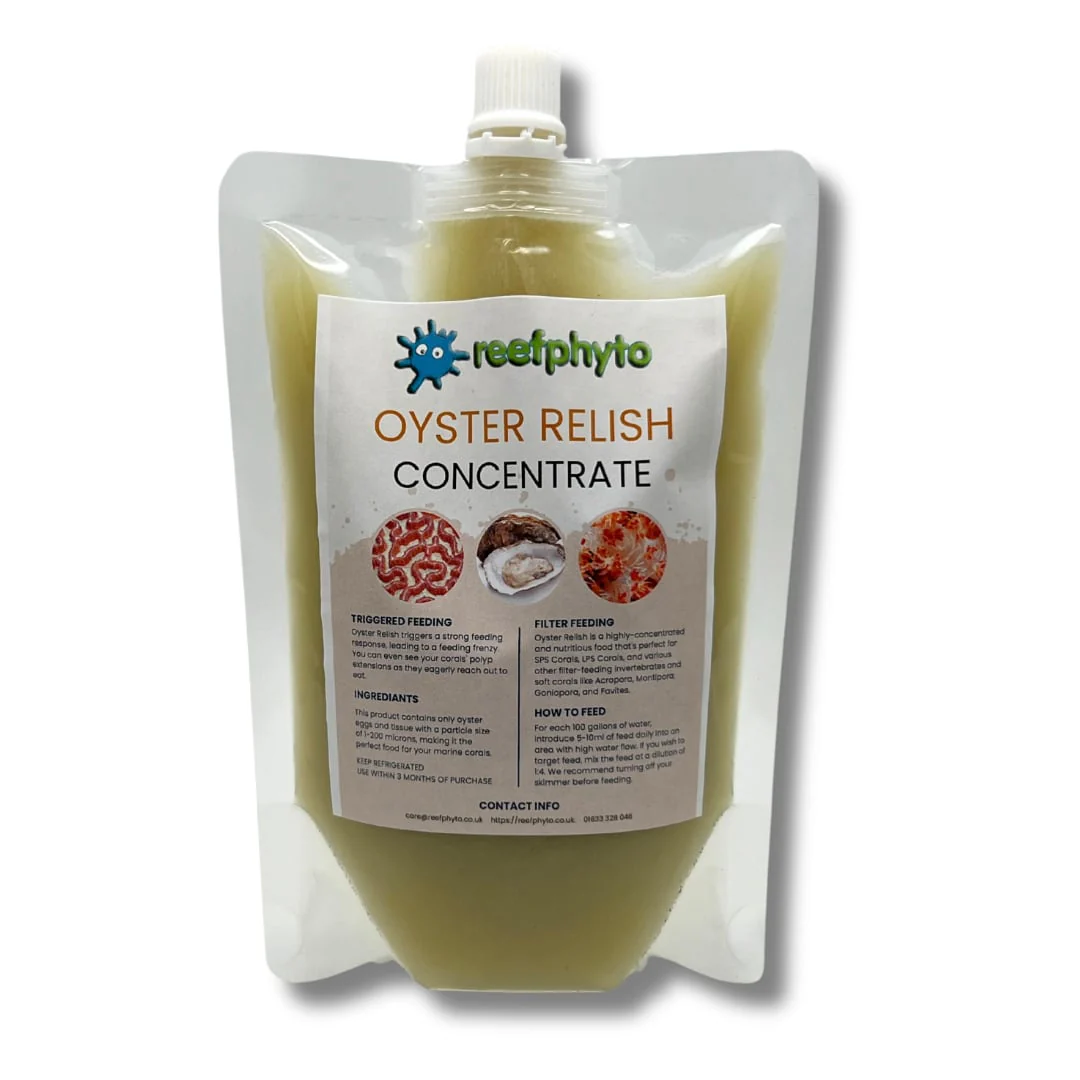
Oyster Relish Concentrate
Oyster Relish Concentrate - Premium Coral & Reef Nutrition
The corals are open. The water chemistry is dialled in. Alkalinity, calcium, and magnesium are where they need to be, and the phytoplankton is going in on schedule. But the polyp extension is inconsistent, the tissue colour is flatter than it should be, and the growth rate of the SPS colonies is slower than the tank parameters suggest it should be. Everything looks right. Something in the feeding is still missing.
Reef corals are not purely photosynthetic. Zooxanthellae provide a significant portion of their energy needs under good light, but the coral tissue itself requires heterotrophic feeding to support growth, pigmentation, and the synthesis of the proteins and fatty acids that water chemistry alone cannot supply. In the wild, corals feed continuously on dissolved organic matter, zooplankton, and particulate organic material in the water column. In captivity, the density and diversity of that particulate nutrition is a fraction of what the reef environment provides and phytoplankton, however useful for zooplankton culture and filter feeders, does not cover the animal-derived nutritional fraction that coral tissue needs.
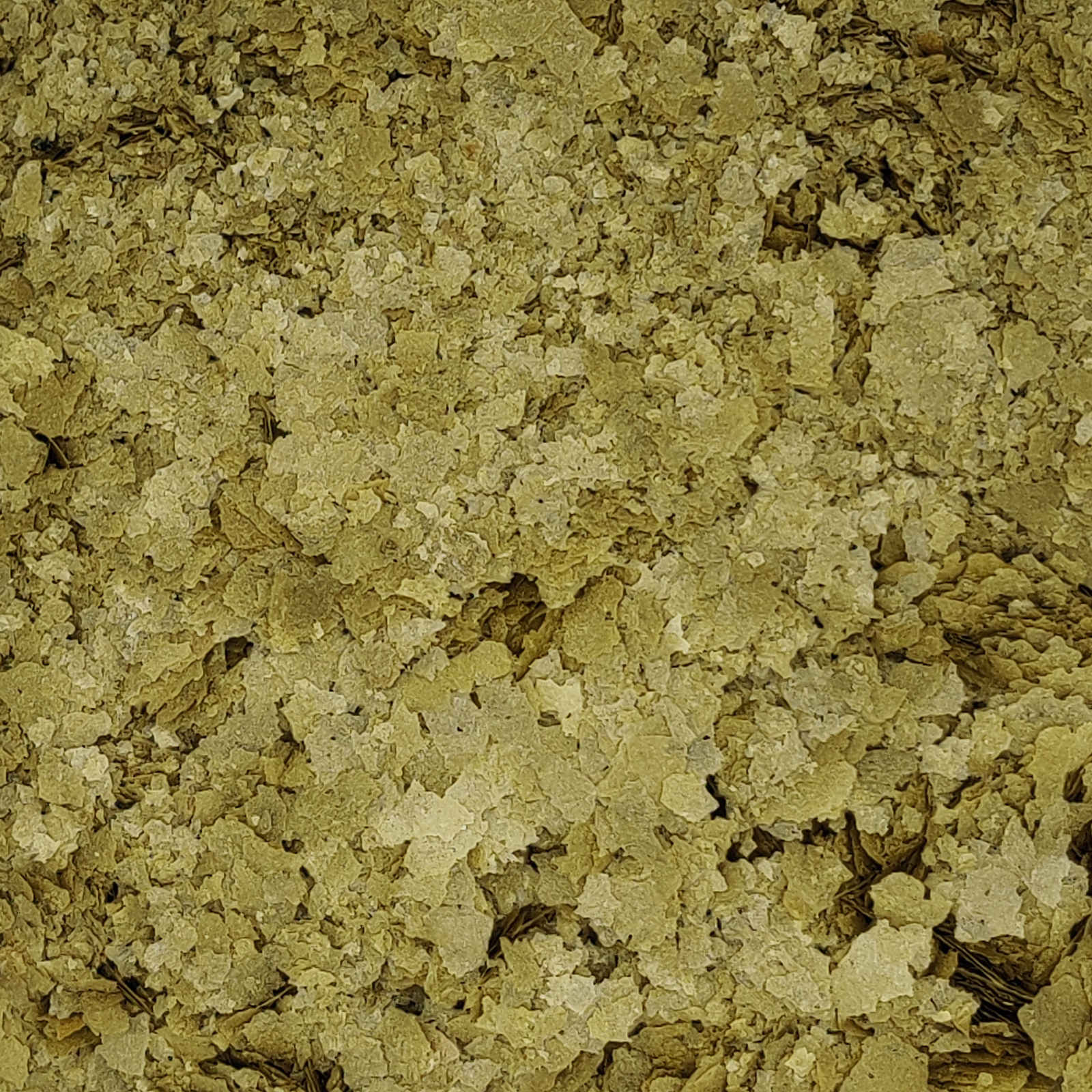
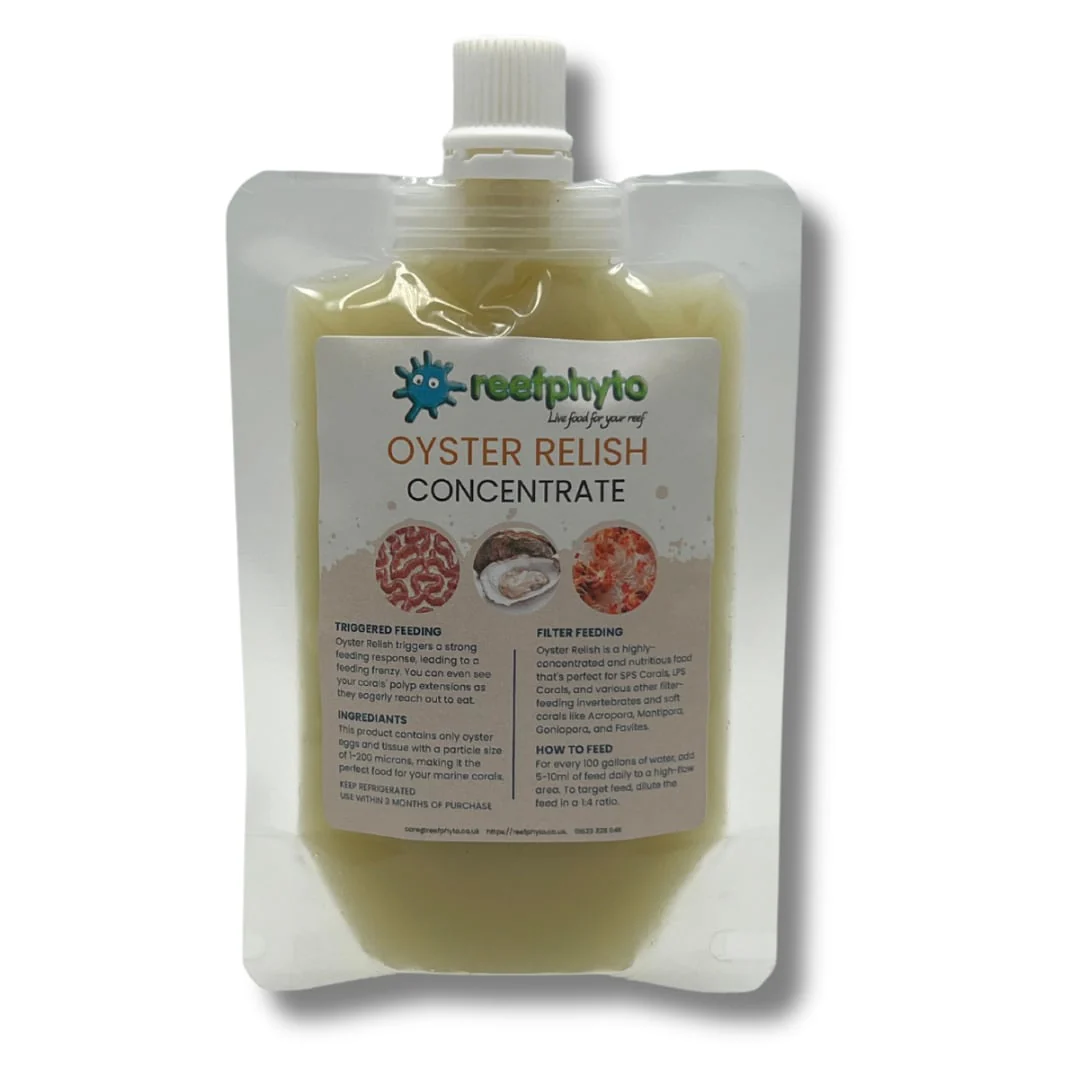
Reefphyto Oyster Relish Concentrate is made exclusively from fresh oyster eggs and ovarian tissue, the most nutrient-dense parts of the oyster, finely milled to a particle size range of 1 to 200 microns. This range covers coral polyps from small-polyped SPS through to large-polyped LPS, as well as filter-feeding invertebrates, copepods, and mysids that benefit from the same particulate nutrition. It provides proteins, essential amino acids, carotenoids, vitamins, HUFAs, PUFAs, and omega-3 and omega-6 fatty acids in a form that coral tissue absorbs directly.
For general feeding add 5 to 10ml per 100 gallons daily into a high-flow area with the skimmer off; for target feeding dilute 1:4 with tank water and apply directly to individual corals or invertebrates by pipette or turkey baster. Store refrigerated and use within three months. Available in 50ml, 100ml, and 250ml.
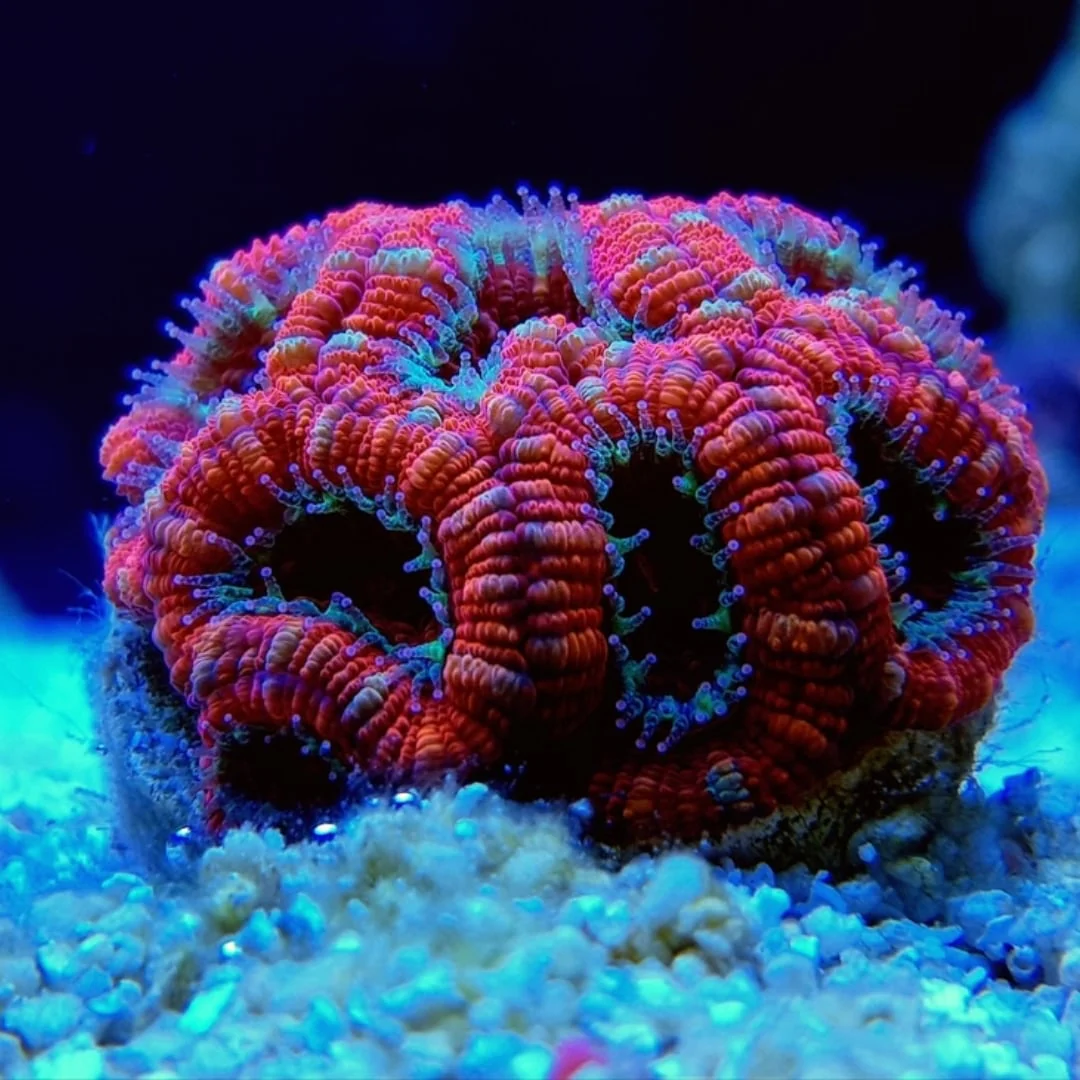
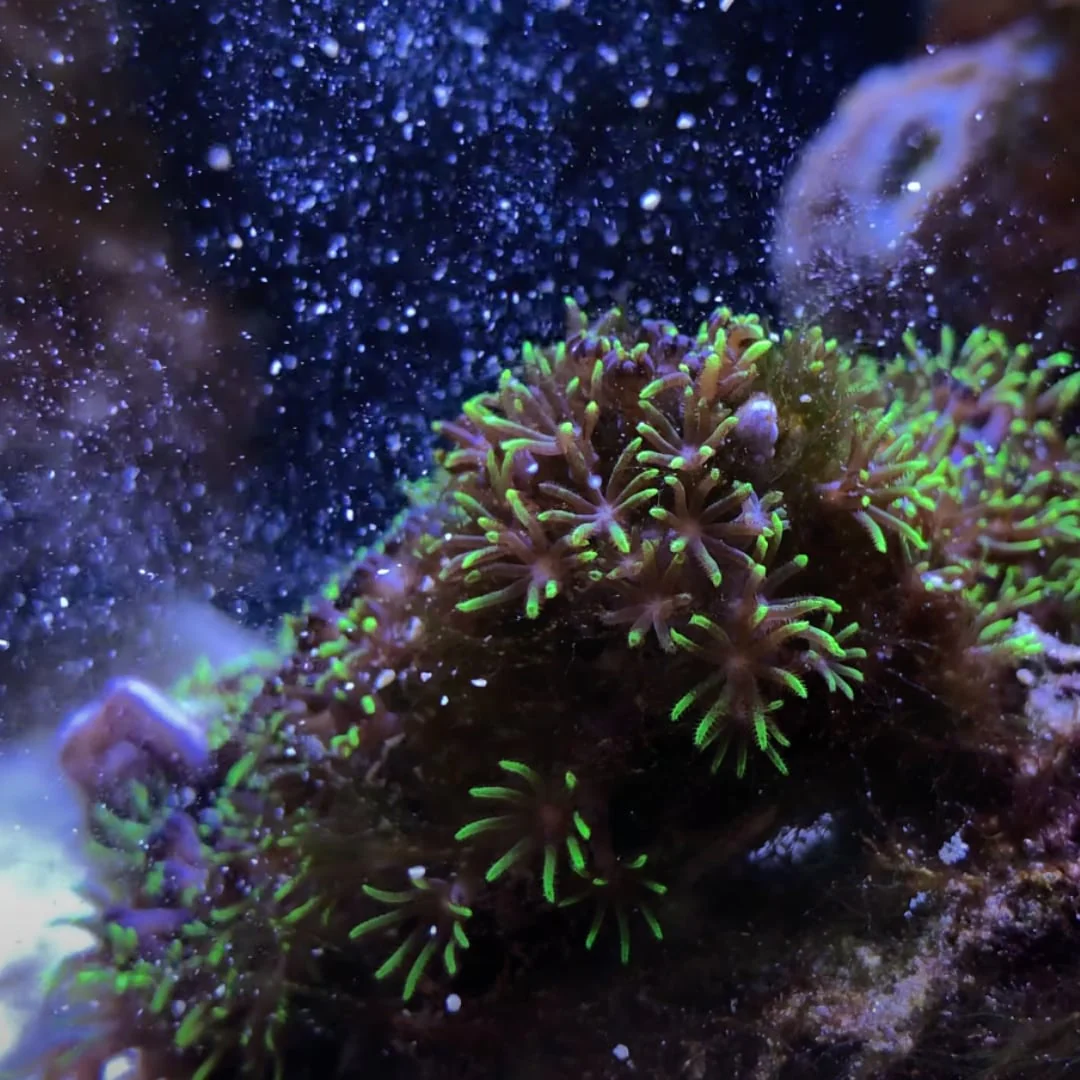
The feeding response is usually immediate and visible. Polyps extend more fully within minutes of the food reaching them. Over weeks of consistent feeding the colour deepens, tissue fills out, and growth rate in SPS colonies increases in ways that water chemistry adjustments alone do not produce. This is the nutritional input that the tank's corals have been drawing on when they could get it, and were doing without when they could not.
Reefphyto has supplied coral and reef nutrition to keepers across the UK since 2008. Oyster Relish works alongside phytoplankton and live zooplankton as part of a complete reef feeding programme, if you want guidance on how to combine products for your specific coral mix, contact us directly. Darren responds personally.
Feed the coral tissue, not just the chemistry.
The Heterotrophic Feeding Gap in Coral Nutrition
The majority of coral feeding advice in reef keeping focuses on water chemistry: maintaining the correct alkalinity, calcium, and magnesium concentrations to support calcification, and ensuring adequate light for zooxanthellae photosynthesis. These are genuinely important and the foundation of coral health in captivity. But they are not the whole picture.
Reef corals are mixotrophic organisms. They obtain energy both from photosynthesis via their zooxanthellae symbionts and from direct heterotrophic feeding on organic particles in the water column. In a healthy coral reef environment, the water column contains a continuous supply of dissolved organic matter, zooplankton nauplii, phytoplankton, bacteria, and particulate organic material that corals capture with their tentacles and absorb through their tissue. This heterotrophic input provides proteins, fatty acids, amino acids, and micronutrients that photosynthesis cannot produce and water chemistry cannot replace.
In captivity, even a well-maintained reef tank has a water column that is nutritionally impoverished compared to the wild reef environment. Phytoplankton dosing contributes to the organic matter available, but phytoplankton is primarily a plant-derived nutrition source. The animal-derived fraction, the proteins, HUFAs, and amino acids found in zooplankton and particulate organic matter, is absent or present only at very low concentrations unless it is actively added. This is the heterotrophic feeding gap that Oyster Relish Concentrate is designed to fill.
What Oyster Relish Concentrate Contains
The product is made exclusively from fresh oyster eggs and ovarian tissue. Oyster gonads and ovarian tissue are among the most nutritionally dense marine materials available for reef feeding applications, concentrated with the proteins, amino acids, carotenoids, and fatty acids that the oyster synthesises specifically for reproductive success. The use of eggs and ovarian tissue rather than general oyster tissue or meal ensures the nutritional profile is as dense as possible per millilitre of product.
The nutritional composition includes proteins and essential amino acids that support coral tissue growth and repair, carotenoids that contribute to coral pigmentation and the chromoprotein expression that drives the deep blues, greens, and purples in SPS corals under good nutrition, vitamins involved in metabolic function, and a full spectrum of highly unsaturated fatty acids including HUFAs, PUFAs, omega-3, and omega-6. These fatty acids are critical for coral tissue integrity, particularly in fast-growing SPS species where the tissue-to-skeleton ratio is high and the demands on tissue synthesis are continuous.
The product is finely milled to a particle size range of 1 to 200 microns. This range covers the feeding apparatus of small-polyped SPS corals at the lower end, large-polyped LPS corals through the mid-range, and filter-feeding invertebrates, copepods, amphipods, and mysids across the full range. A single product feeding multiple inhabitants simultaneously is practically useful in a reef tank where multiple species with different particle size requirements occupy the same water column.
How to Feed Oyster Relish Concentrate
There are two feeding approaches depending on the goal.
For general reef feeding, raising the organic particle density of the water column across the whole tank, add 5 to 10ml per 100 gallons of tank volume daily into a high-flow area with the protein skimmer switched off. The high-flow introduction distributes the product through the water column before it can be localised or diluted to ineffective concentrations. The skimmer should be turned off for at least thirty to sixty minutes during and after feeding to allow the coral tissue and filter feeders time to absorb the nutrition before it is removed from the water.
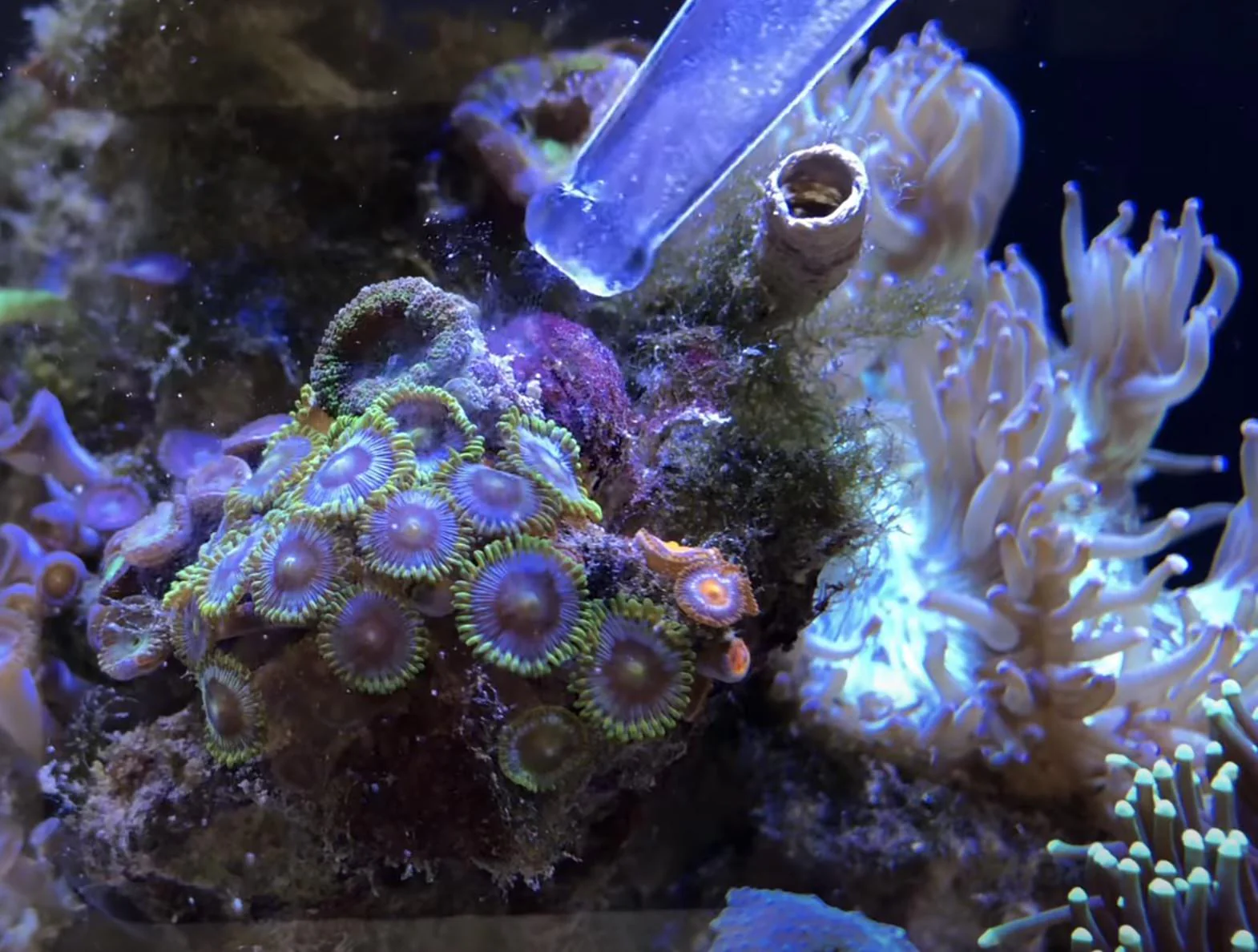
For target feeding specific corals or invertebrates, particularly valuable for large LPS corals, non-photosynthetic corals, or specific filter feeders that benefit from a directed food source, dilute Oyster Relish at a 1:4 ratio with tank water and apply directly to the target coral or invertebrate using a pipette or turkey baster. The dilution helps the product disperse around the coral's tentacles and polyps rather than landing as a concentrated bolus that may be rejected. The coral's feeding response to a properly diluted target feed is usually visible within minutes, tentacle extension, tentacle curling around particles, and active transport of food toward the mouth disc.
What to Expect With Consistent Feeding
The feeding response in healthy corals is typically immediate and visible, which makes Oyster Relish one of the more gratifying products to use in a reef feeding programme. Polyps that extend tentatively under phytoplankton dosing alone often extend more fully and actively when animal-derived nutrition is present in the water column. The tentacle activity, the curling and transport behaviour, and the general increase in polyp expansion are reliable indicators that the corals are responding to the nutritional content of the product.
Over a period of weeks of consistent feeding, the cumulative effects of the heterotrophic nutrition become apparent in the coral tissue itself. Colour in SPS corals deepens and becomes more saturated, particularly in specimens carrying blue, green, or purple chromoproteins as the carotenoids and amino acid precursors to chromoprotein synthesis accumulate. Tissue fullness increases, with SPS colonies in particular showing more robust tissue coverage between corallites rather than the thinning that indicates nutritional stress. Growth rate in calcifying corals improves in tanks where the heterotrophic feeding was previously absent or minimal.
These changes are most pronounced in tanks where water chemistry is already well maintained. Oyster Relish does not compensate for alkalinity instability or calcium depletion. It adds the organic nutritional dimension that water chemistry alone cannot provide, on top of the foundation that correct chemistry establishes.
Oyster Relish in a Complete Reef Feeding Programme
Oyster Relish Concentrate works alongside rather than instead of the other components of a reef feeding programme.
Phytoplankton, whether Nannochloropsis gaditana, the Nannochloropsis and Tetraselmis blend, or Reef Juice, feeds filter feeders, zooplankton cultures, and provides the plant-derived omega-3s that contribute to the general organic richness of the water column. It does not provide the animal-derived proteins and fatty acids that Oyster Relish delivers.
Live zooplankton, copepods and rotifers, provide moving prey particles that trigger a different feeding response in corals and fish than dissolved or suspended particles. Zoo-Shot or live zooplankton additions deliver the behavioural feeding stimulus that particulate feeds cannot fully replicate.
Oyster Relish fills the animal-derived particulate nutrition space between these two. Dosing it daily or several times a week alongside phytoplankton and periodic live zooplankton additions creates a nutritional profile for the reef that more closely approximates the organic diversity of a natural reef water column than any single product can achieve alone.
Frequently Asked Questions
How often should I feed Oyster Relish?
Daily feeding at the general dose rate of 5 to 10ml per 100 gallons produces the most consistent results for SPS and LPS growth and colouration. For keepers who prefer less frequent dosing, three to four times per week is sufficient to provide meaningful heterotrophic nutrition without the daily routine. Less frequent dosing will produce slower but still visible improvement over the baseline.
Does it affect water quality or nitrate levels?
As with all organic reef foods, consistent addition of Oyster Relish contributes to the organic load in the tank. In a well-skimmed, well-filtered system running a chaeto or macroalgae refugium, the organic input from the recommended dose rate is typically managed without measurable nitrate or phosphate accumulation. The instruction to run the skimmer off during feeding and for thirty to sixty minutes afterward should be followed, then resume normal skimmer operation to remove excess organic matter before it degrades.
Is this suitable for non-photosynthetic corals?
Yes, and NPS corals are among the primary beneficiaries. Non-photosynthetic species such as Dendrophyllia, Tubastrea, and sun corals depend entirely on heterotrophic feeding and have no photosynthetic energy input to supplement their diet. Target feeding with Oyster Relish diluted 1:4 directly onto the extended polyps of NPS corals provides the animal-derived organic nutrition these species require. Combine with Zoo-Shot or live rotifers for the broadest nutritional input into NPS specimens.
Can filter feeders and invertebrates use this product?
Yes. The 1 to 200 micron particle size range covers the feeding apparatus of most filter-feeding invertebrates including feather duster worms, Christmas tree worms, flame scallops, and sponges. Copepods, amphipods, and mysids also consume particles within this range and benefit from the increased organic matter availability in the water column following dosing.
Can I use this alongside Zoo-Shot or live zooplankton?
Yes, and the combination is effective. Oyster Relish provides the dissolved and fine-particulate animal-derived nutrition. Zoo-Shot or live rotifers and copepods provide the larger living prey particles that trigger active capture behaviour in corals and fish. Used together they cover a broader nutritional and particle-size range than either product alone.
Reefphyto - Reef Nutrition from Wales Since 2008
Reefphyto has been supplying live and prepared marine nutrition to reef keepers across the UK since 2008. If you want guidance on building a complete coral feeding programme using Oyster Relish alongside phytoplankton and live zooplankton products, contact us directly. Darren responds personally to every enquiry.
Product Information
Product Information
Shipping & Returns
Shipping & Returns
Description
Oyster Relish Concentrate - Premium Coral & Reef Nutrition
The corals are open. The water chemistry is dialled in. Alkalinity, calcium, and magnesium are where they need to be, and the phytoplankton is going in on schedule. But the polyp extension is inconsistent, the tissue colour is flatter than it should be, and the growth rate of the SPS colonies is slower than the tank parameters suggest it should be. Everything looks right. Something in the feeding is still missing.
Reef corals are not purely photosynthetic. Zooxanthellae provide a significant portion of their energy needs under good light, but the coral tissue itself requires heterotrophic feeding to support growth, pigmentation, and the synthesis of the proteins and fatty acids that water chemistry alone cannot supply. In the wild, corals feed continuously on dissolved organic matter, zooplankton, and particulate organic material in the water column. In captivity, the density and diversity of that particulate nutrition is a fraction of what the reef environment provides and phytoplankton, however useful for zooplankton culture and filter feeders, does not cover the animal-derived nutritional fraction that coral tissue needs.
Reefphyto Oyster Relish Concentrate is made exclusively from fresh oyster eggs and ovarian tissue, the most nutrient-dense parts of the oyster, finely milled to a particle size range of 1 to 200 microns. This range covers coral polyps from small-polyped SPS through to large-polyped LPS, as well as filter-feeding invertebrates, copepods, and mysids that benefit from the same particulate nutrition. It provides proteins, essential amino acids, carotenoids, vitamins, HUFAs, PUFAs, and omega-3 and omega-6 fatty acids in a form that coral tissue absorbs directly.
For general feeding add 5 to 10ml per 100 gallons daily into a high-flow area with the skimmer off; for target feeding dilute 1:4 with tank water and apply directly to individual corals or invertebrates by pipette or turkey baster. Store refrigerated and use within three months. Available in 50ml, 100ml, and 250ml.
The feeding response is usually immediate and visible. Polyps extend more fully within minutes of the food reaching them. Over weeks of consistent feeding the colour deepens, tissue fills out, and growth rate in SPS colonies increases in ways that water chemistry adjustments alone do not produce. This is the nutritional input that the tank's corals have been drawing on when they could get it, and were doing without when they could not.
Reefphyto has supplied coral and reef nutrition to keepers across the UK since 2008. Oyster Relish works alongside phytoplankton and live zooplankton as part of a complete reef feeding programme, if you want guidance on how to combine products for your specific coral mix, contact us directly. Darren responds personally.
Feed the coral tissue, not just the chemistry.
The Heterotrophic Feeding Gap in Coral Nutrition
The majority of coral feeding advice in reef keeping focuses on water chemistry: maintaining the correct alkalinity, calcium, and magnesium concentrations to support calcification, and ensuring adequate light for zooxanthellae photosynthesis. These are genuinely important and the foundation of coral health in captivity. But they are not the whole picture.
Reef corals are mixotrophic organisms. They obtain energy both from photosynthesis via their zooxanthellae symbionts and from direct heterotrophic feeding on organic particles in the water column. In a healthy coral reef environment, the water column contains a continuous supply of dissolved organic matter, zooplankton nauplii, phytoplankton, bacteria, and particulate organic material that corals capture with their tentacles and absorb through their tissue. This heterotrophic input provides proteins, fatty acids, amino acids, and micronutrients that photosynthesis cannot produce and water chemistry cannot replace.
In captivity, even a well-maintained reef tank has a water column that is nutritionally impoverished compared to the wild reef environment. Phytoplankton dosing contributes to the organic matter available, but phytoplankton is primarily a plant-derived nutrition source. The animal-derived fraction, the proteins, HUFAs, and amino acids found in zooplankton and particulate organic matter, is absent or present only at very low concentrations unless it is actively added. This is the heterotrophic feeding gap that Oyster Relish Concentrate is designed to fill.
What Oyster Relish Concentrate Contains
The product is made exclusively from fresh oyster eggs and ovarian tissue. Oyster gonads and ovarian tissue are among the most nutritionally dense marine materials available for reef feeding applications, concentrated with the proteins, amino acids, carotenoids, and fatty acids that the oyster synthesises specifically for reproductive success. The use of eggs and ovarian tissue rather than general oyster tissue or meal ensures the nutritional profile is as dense as possible per millilitre of product.
The nutritional composition includes proteins and essential amino acids that support coral tissue growth and repair, carotenoids that contribute to coral pigmentation and the chromoprotein expression that drives the deep blues, greens, and purples in SPS corals under good nutrition, vitamins involved in metabolic function, and a full spectrum of highly unsaturated fatty acids including HUFAs, PUFAs, omega-3, and omega-6. These fatty acids are critical for coral tissue integrity, particularly in fast-growing SPS species where the tissue-to-skeleton ratio is high and the demands on tissue synthesis are continuous.
The product is finely milled to a particle size range of 1 to 200 microns. This range covers the feeding apparatus of small-polyped SPS corals at the lower end, large-polyped LPS corals through the mid-range, and filter-feeding invertebrates, copepods, amphipods, and mysids across the full range. A single product feeding multiple inhabitants simultaneously is practically useful in a reef tank where multiple species with different particle size requirements occupy the same water column.
How to Feed Oyster Relish Concentrate
There are two feeding approaches depending on the goal.
For general reef feeding, raising the organic particle density of the water column across the whole tank, add 5 to 10ml per 100 gallons of tank volume daily into a high-flow area with the protein skimmer switched off. The high-flow introduction distributes the product through the water column before it can be localised or diluted to ineffective concentrations. The skimmer should be turned off for at least thirty to sixty minutes during and after feeding to allow the coral tissue and filter feeders time to absorb the nutrition before it is removed from the water.
For target feeding specific corals or invertebrates, particularly valuable for large LPS corals, non-photosynthetic corals, or specific filter feeders that benefit from a directed food source, dilute Oyster Relish at a 1:4 ratio with tank water and apply directly to the target coral or invertebrate using a pipette or turkey baster. The dilution helps the product disperse around the coral's tentacles and polyps rather than landing as a concentrated bolus that may be rejected. The coral's feeding response to a properly diluted target feed is usually visible within minutes, tentacle extension, tentacle curling around particles, and active transport of food toward the mouth disc.
What to Expect With Consistent Feeding
The feeding response in healthy corals is typically immediate and visible, which makes Oyster Relish one of the more gratifying products to use in a reef feeding programme. Polyps that extend tentatively under phytoplankton dosing alone often extend more fully and actively when animal-derived nutrition is present in the water column. The tentacle activity, the curling and transport behaviour, and the general increase in polyp expansion are reliable indicators that the corals are responding to the nutritional content of the product.
Over a period of weeks of consistent feeding, the cumulative effects of the heterotrophic nutrition become apparent in the coral tissue itself. Colour in SPS corals deepens and becomes more saturated, particularly in specimens carrying blue, green, or purple chromoproteins as the carotenoids and amino acid precursors to chromoprotein synthesis accumulate. Tissue fullness increases, with SPS colonies in particular showing more robust tissue coverage between corallites rather than the thinning that indicates nutritional stress. Growth rate in calcifying corals improves in tanks where the heterotrophic feeding was previously absent or minimal.
These changes are most pronounced in tanks where water chemistry is already well maintained. Oyster Relish does not compensate for alkalinity instability or calcium depletion. It adds the organic nutritional dimension that water chemistry alone cannot provide, on top of the foundation that correct chemistry establishes.
Oyster Relish in a Complete Reef Feeding Programme
Oyster Relish Concentrate works alongside rather than instead of the other components of a reef feeding programme.
Phytoplankton, whether Nannochloropsis gaditana, the Nannochloropsis and Tetraselmis blend, or Reef Juice, feeds filter feeders, zooplankton cultures, and provides the plant-derived omega-3s that contribute to the general organic richness of the water column. It does not provide the animal-derived proteins and fatty acids that Oyster Relish delivers.
Live zooplankton, copepods and rotifers, provide moving prey particles that trigger a different feeding response in corals and fish than dissolved or suspended particles. Zoo-Shot or live zooplankton additions deliver the behavioural feeding stimulus that particulate feeds cannot fully replicate.
Oyster Relish fills the animal-derived particulate nutrition space between these two. Dosing it daily or several times a week alongside phytoplankton and periodic live zooplankton additions creates a nutritional profile for the reef that more closely approximates the organic diversity of a natural reef water column than any single product can achieve alone.
Frequently Asked Questions
How often should I feed Oyster Relish?
Daily feeding at the general dose rate of 5 to 10ml per 100 gallons produces the most consistent results for SPS and LPS growth and colouration. For keepers who prefer less frequent dosing, three to four times per week is sufficient to provide meaningful heterotrophic nutrition without the daily routine. Less frequent dosing will produce slower but still visible improvement over the baseline.
Does it affect water quality or nitrate levels?
As with all organic reef foods, consistent addition of Oyster Relish contributes to the organic load in the tank. In a well-skimmed, well-filtered system running a chaeto or macroalgae refugium, the organic input from the recommended dose rate is typically managed without measurable nitrate or phosphate accumulation. The instruction to run the skimmer off during feeding and for thirty to sixty minutes afterward should be followed, then resume normal skimmer operation to remove excess organic matter before it degrades.
Is this suitable for non-photosynthetic corals?
Yes, and NPS corals are among the primary beneficiaries. Non-photosynthetic species such as Dendrophyllia, Tubastrea, and sun corals depend entirely on heterotrophic feeding and have no photosynthetic energy input to supplement their diet. Target feeding with Oyster Relish diluted 1:4 directly onto the extended polyps of NPS corals provides the animal-derived organic nutrition these species require. Combine with Zoo-Shot or live rotifers for the broadest nutritional input into NPS specimens.
Can filter feeders and invertebrates use this product?
Yes. The 1 to 200 micron particle size range covers the feeding apparatus of most filter-feeding invertebrates including feather duster worms, Christmas tree worms, flame scallops, and sponges. Copepods, amphipods, and mysids also consume particles within this range and benefit from the increased organic matter availability in the water column following dosing.
Can I use this alongside Zoo-Shot or live zooplankton?
Yes, and the combination is effective. Oyster Relish provides the dissolved and fine-particulate animal-derived nutrition. Zoo-Shot or live rotifers and copepods provide the larger living prey particles that trigger active capture behaviour in corals and fish. Used together they cover a broader nutritional and particle-size range than either product alone.
Reefphyto - Reef Nutrition from Wales Since 2008
Reefphyto has been supplying live and prepared marine nutrition to reef keepers across the UK since 2008. If you want guidance on building a complete coral feeding programme using Oyster Relish alongside phytoplankton and live zooplankton products, contact us directly. Darren responds personally to every enquiry.